
NAI PHÚC VIỆT NAM
SUSTAINABLE CONSTRUCTION
 21/7A Lê Quang Đạo, xã Bà Điểm, Tp. Hồ Chí Minh, Việt Nam

Sàn PU (Polyurethane) tự san phẳng là một trong những giải pháp sàn công nghiệp hiện đại, có khả năng tự cân bằng bề mặt, tạo lớp phủ liền mạch mà không có mối nối. Loại sàn này nổi bật với tính đàn hồi cao, khả năng chịu lực tốt và kháng hóa chất vượt trội, giúp tăng tuổi thọ sử dụng và giảm chi phí bảo trì so với các loại sàn truyền thống như epoxy hoặc bê tông.
Ứng dụng của sàn PU tự san phẳng rất rộng rãi trong nhiều ngành công nghiệp. Trong ngành thực phẩm và đồ uống, sàn PU giúp đảm bảo tiêu chuẩn an toàn vệ sinh thực phẩm nhờ khả năng chống thấm nước, chống vi khuẩn và dễ dàng vệ sinh. Trong ngành dược phẩm và y tế, sàn PU đáp ứng các tiêu chuẩn khắt khe của GMP, FDA, giúp duy trì môi trường sạch khuẩn, không bám bụi, không thải khí độc hại. Đặc biệt, tại các kho lạnh hoặc nhà máy có nhiệt độ khắc nghiệt, sàn PU vẫn giữ được độ bền cao, không bị nứt gãy hay co ngót khi gặp nhiệt độ thấp.
Ngoài ra, trong các ngành công nghiệp nặng như sản xuất hóa chất, cơ khí, ô tô, sàn PU được ứng dụng nhờ khả năng chịu tải trọng cao, kháng dầu mỡ và hóa chất mạnh. Không chỉ dừng lại ở môi trường công nghiệp, sàn PU còn được sử dụng trong các trung tâm thương mại, showroom, khu vực công cộng nhờ tính thẩm mỹ cao, đa dạng màu sắc và bề mặt nhẵn mịn, tạo cảm giác sang trọng.
Thi công sàn PU tự san phẳng là một quá trình đòi hỏi sự chính xác cao, tuân thủ nghiêm ngặt các tiêu chuẩn kỹ thuật để đảm bảo chất lượng, độ bền và thẩm mỹ của sàn. Dưới đây là các yêu cầu kỹ thuật quan trọng trong từng giai đoạn thi công.
2.1 Chuẩn bị bề mặt nền bê tông
Bề mặt nền bê tông đóng vai trò quyết định đến độ bám dính của lớp PU. Nếu nền không được xử lý đúng cách, sàn PU có thể bị bong tróc, nứt vỡ hoặc phồng rộp sau một thời gian sử dụng. Quá trình chuẩn bị bề mặt bao gồm:
Mài bề mặt bằng máy mài công nghiệp để loại bỏ bụi bẩn, dầu mỡ, sơn cũ và các tạp chất có thể làm giảm độ bám dính của lớp PU.
Tạo độ nhám tiêu chuẩn (CSP 3 - CSP 5) để giúp lớp sơn PU liên kết chặt chẽ với nền bê tông.
Kiểm tra độ ẩm của bê tông, đảm bảo độ ẩm dưới 5% để tránh tình trạng PU bị phồng rộp do hơi nước bốc lên. Nếu độ ẩm vượt mức, cần sử dụng hệ sơn chuyên dụng hoặc lớp chống ẩm.
Xử lý vết nứt và khe co giãn, các vết nứt lớn cần được trám bằng vật liệu chuyên dụng để đảm bảo bề mặt đồng nhất trước khi thi công.
2.2 Thi công lớp lót (Primer) – Bước then chốt tăng độ bám dính
Lớp lót đóng vai trò trung gian giữa nền bê tông và lớp phủ PU, giúp tăng độ bám dính và giảm nguy cơ bong tróc. Một số yêu cầu kỹ thuật quan trọng gồm:
Chọn loại primer phù hợp với từng điều kiện nền bê tông, có thể là epoxy hoặc PU lót.
Thi công đều khắp bề mặt, đảm bảo lớp lót thẩm thấu sâu vào nền và tạo liên kết tốt.
Thời gian khô của lớp lót từ 4 - 8 giờ tùy vào điều kiện thời tiết, không nên thi công lớp PU khi lớp lót chưa khô hoàn toàn.
2.3 Pha trộn vật liệu PU – Độ chính xác quyết định chất lượng sàn
Việc pha trộn sơn PU cần tuân thủ đúng tỷ lệ của nhà sản xuất để đảm bảo các tính chất cơ lý như độ bền, khả năng tự san phẳng và kháng hóa chất. Một số điểm quan trọng:
Pha trộn theo tỷ lệ chuẩn, tránh pha quá loãng hoặc quá đặc làm ảnh hưởng đến tính chất của sàn.
Thời gian sử dụng hỗn hợp PU sau khi pha trộn chỉ từ 20 - 30 phút, do đó phải thi công ngay để tránh đông kết.
Sử dụng máy khuấy tốc độ cao để đảm bảo hỗn hợp đồng nhất, tránh tình trạng vón cục hoặc phân lớp.
2.4 Thi công lớp phủ PU tự san phẳng – Quy trình chuẩn
Lớp PU tự san phẳng có độ dày phổ biến từ 2mm – 5mm tùy theo nhu cầu sử dụng. Khi thi công cần đảm bảo các tiêu chí sau:
Dùng bàn gạt răng cưa để dàn đều lớp sơn PU theo độ dày tiêu chuẩn.
Sử dụng lu lăn gai để loại bỏ bọt khí và giúp bề mặt sàn phẳng mịn, không bị rỗ.
Đảm bảo thi công liên tục, không gián đoạn, tránh tạo mối nối làm mất tính thẩm mỹ và ảnh hưởng đến kết cấu.
2.5 Kiểm tra, bảo dưỡng và hoàn thiện
Sau khi thi công, sàn cần tối thiểu 24 - 48 giờ để khô bề mặt trước khi chịu tải nhẹ và 5 - 7 ngày để đạt độ cứng hoàn toàn. Một số yêu cầu sau thi công gồm:
Kiểm tra độ phẳng, độ bám dính và xử lý các lỗi nhỏ.
Tránh tiếp xúc với nước hoặc hóa chất trong thời gian bảo dưỡng.
Bảo dưỡng đúng cách để đạt chất lượng cao nhất, tăng tuổi thọ sàn.
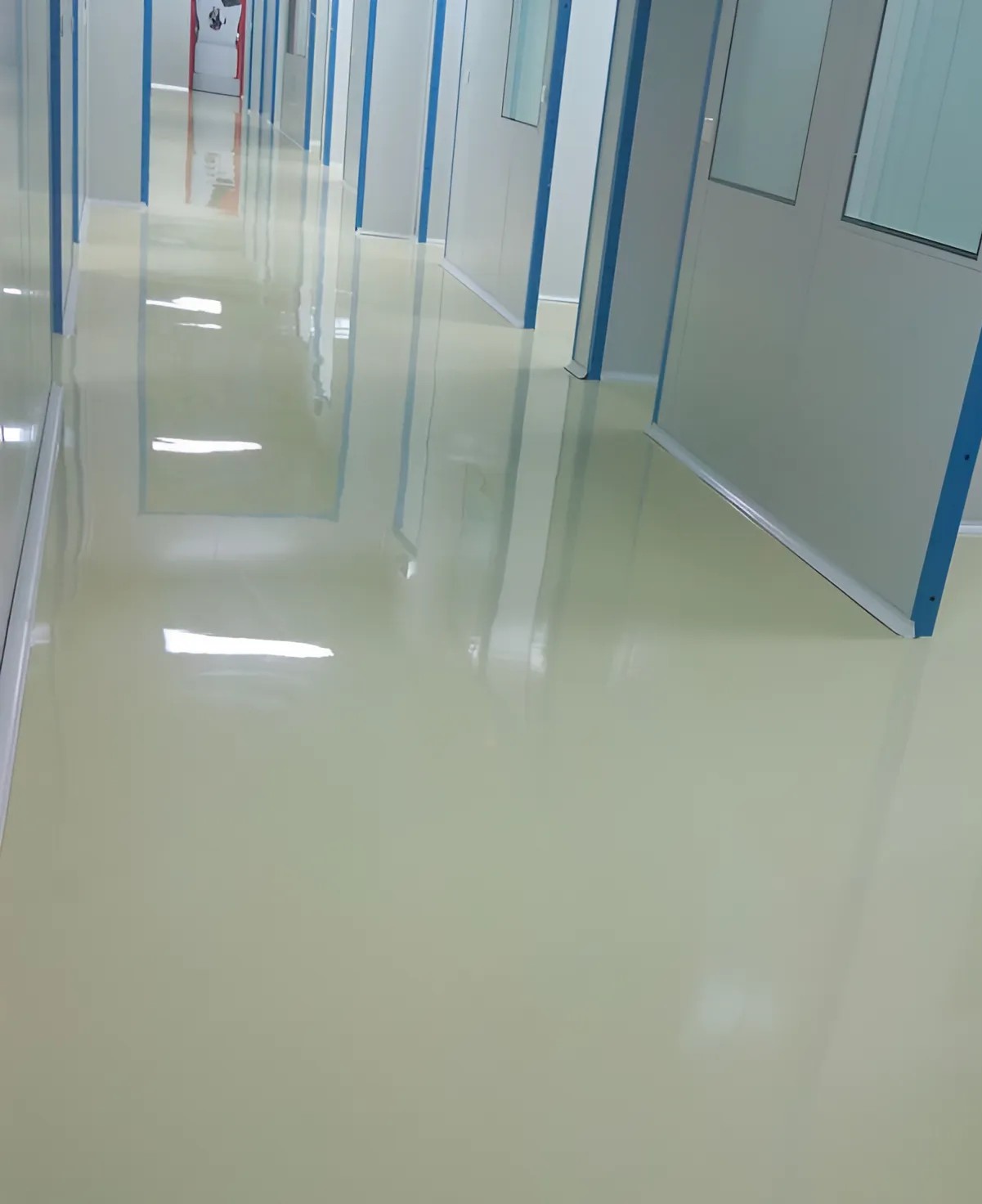
Sàn PU tự san phẳng có nhiều ưu điểm nổi bật so với các loại sàn truyền thống, giúp nó trở thành lựa chọn hàng đầu trong ngành công nghiệp:
Kháng hóa chất mạnh, chống axit, kiềm, dung môi.
Chịu tải trọng cao, thích hợp cho nhà máy sản xuất.
Không mối nối, dễ vệ sinh, phù hợp với ngành thực phẩm và y tế.
Chịu nhiệt độ khắc nghiệt, không co ngót hay nứt gãy.
Tính đàn hồi cao, giảm rung động và chống trơn trượt tốt.
Với hơn 10 năm kinh nghiệm trong lĩnh vực thi công sàn công nghiệp, Công ty TNHH Công Nghiệp Nai Phúc tự hào là đơn vị tiên phong trong việc cung cấp giải pháp sơn Epoxy chất lượng cao cho nhiều ngành nghề khác nhau, từ nhà xưởng, kho bãi, phòng sạch đến bệnh viện, trung tâm thương mại và các khu công nghiệp lớn.
Sở hữu đội ngũ kỹ thuật viên chuyên môn cao, trang thiết bị hiện đại cùng quy trình thi công đạt chuẩn quốc tế, Nai Phúc cam kết mang lại những giải pháp sàn Epoxy tối ưu nhất, không chỉ đảm bảo tính thẩm mỹ mà còn gia tăng độ bền, khả năng chịu tải và chống mài mòn vượt trội cho bề mặt sàn.
Lý do khách hàng tin tưởng lựa chọn Nai Phúc:
✅ Kinh nghiệm chuyên sâu: Nai Phúc có đội ngũ kỹ thuật viên giàu kinh nghiệm, được đào tạo bài bản và luôn cập nhật những công nghệ thi công mới nhất để đảm bảo sàn Epoxy đạt chất lượng cao nhất.
✅ Vật liệu cao cấp – Đảm bảo độ bền vượt trội: Tất cả sản phẩm sơn Epoxy do Nai Phúc sử dụng đều được nhập khẩu từ các thương hiệu uy tín, có chứng nhận chất lượng và độ bền cao. Quy trình thi công chuẩn giúp sơn bám dính tốt, tạo lớp bảo vệ hoàn hảo, giúp sàn có khả năng chống hóa chất, chịu tải trọng lớn và không bị xuống cấp sau thời gian dài sử dụng.
✅ Giải pháp tối ưu chi phí – Giá cả cạnh tranh: Nai Phúc không chỉ cung cấp dịch vụ thi công sàn Epoxy chất lượng cao mà còn đảm bảo mức giá hợp lý nhất. Chúng tôi luôn tư vấn những phương án thi công phù hợp với nhu cầu của từng khách hàng, giúp tối ưu ngân sách mà vẫn đạt hiệu quả tốt nhất.
✅ Chế độ bảo hành lâu dài – Hỗ trợ bảo trì nhanh chóng: Nai Phúc cam kết bảo hành công trình sau khi thi công, hỗ trợ bảo trì và xử lý sự cố nhanh chóng. Bất kỳ vấn đề nào phát sinh trong quá trình sử dụng đều được khắc phục kịp thời, giúp khách hàng hoàn toàn yên tâm về chất lượng sàn.
✅ Thi công đúng tiến độ – Bàn giao đúng thời hạn: Nai Phúc luôn đảm bảo thời gian thi công theo đúng cam kết, giúp khách hàng không bị gián đoạn sản xuất hay ảnh hưởng đến kế hoạch vận hành. Đội ngũ thi công chuyên nghiệp cùng với quy trình làm việc khoa học giúp chúng tôi hoàn thành công trình nhanh chóng mà vẫn đảm bảo chất lượng cao nhất.
Nai Phúc – Đối tác tin cậy của hàng trăm khách hàng doanh nghiệp
Trong nhiều năm qua, Nai Phúc đã thực hiện hàng trăm dự án thi công sàn Epoxy lớn nhỏ trên khắp cả nước, từ các khu công nghiệp trọng điểm cho đến những công trình đặc thù như phòng sạch y tế, xưởng sản xuất thực phẩm, nhà máy linh kiện điện tử… Sự hài lòng của khách hàng chính là minh chứng rõ ràng nhất cho chất lượng dịch vụ mà Nai Phúc mang lại.
Xử lý bề mặt bê tông trước khi sơn Epoxy là bước quan trọng và không thể bỏ qua, quyết định đến chất lượng, độ bền cũng như tuổi thọ của hệ thống sàn công nghiệp. Nếu bề mặt không được xử lý đúng cách, lớp sơn Epoxy sẽ dễ bị bong tróc, nứt gãy hoặc xuống cấp nhanh chóng, gây ảnh hưởng lớn đến quá trình sử dụng và làm phát sinh chi phí sửa chữa, bảo trì.
Chính vì vậy, lựa chọn một đơn vị thi công uy tín và chuyên nghiệp như Nai Phúc sẽ giúp đảm bảo công trình đạt chất lượng cao nhất, đáp ứng đầy đủ các yêu cầu kỹ thuật và mang lại hiệu quả lâu dài. Với nhiều năm kinh nghiệm, quy trình thi công đạt chuẩn, đội ngũ chuyên gia tận tâm và vật liệu chất lượng cao, Nai Phúc cam kết cung cấp giải pháp thi công sàn Epoxy bền đẹp, an toàn và tối ưu chi phí cho khách hàng.
Nếu bạn đang tìm kiếm một giải pháp thi công sàn Epoxy chuyên nghiệp, hãy liên hệ ngay với Nai Phúc để được tư vấn chi tiết và nhận báo giá tốt nhất!



NAIPHUC VN CO., LTD